After a successful Clustering Event Nr 1, held in 2025 in Sopot, Poland (read more here), Clustering Event Nr 2 re-convened the three sister projects, ObsSea4Clim, BioEcoOcean, and BioGeoSea, in a beautiful setting of the Royal Belgian Institute of Natural Sciences in Brussels. Clustering Event Nr 2 took was held on 20-21 April 2026.
The event provided space for discussions and decision-making between the three projects, to ensure streamlined projects’ outcomes and policy recommendations.
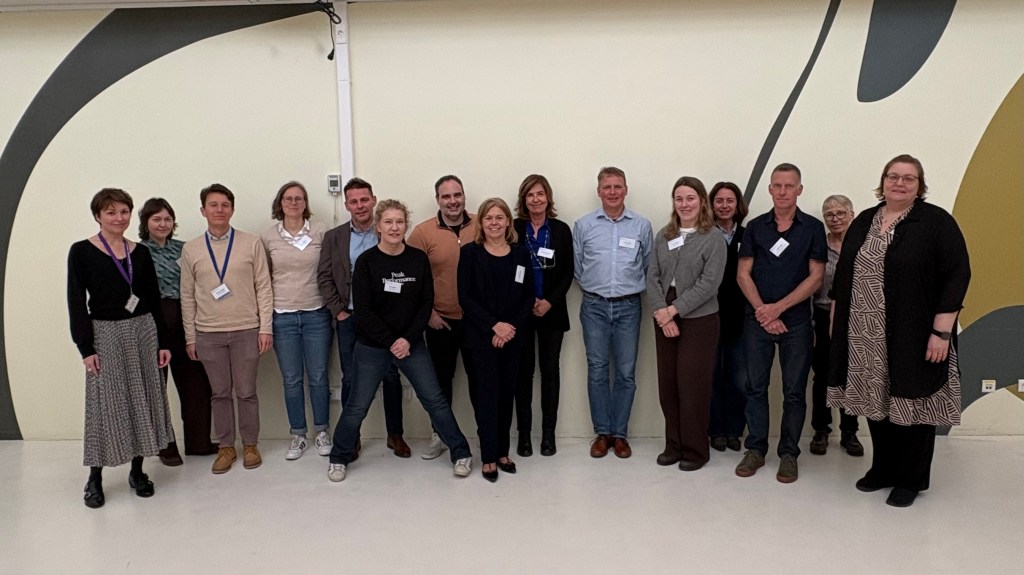
The Clustering Event Nr 2 focused on the following overarching main topics:
- Interoperability of data and indicators;
- Coordination of stakeholder and policy engagement,
- The definition of a legacy pathway anchored in European ocean observing governance through EuroGOOS,
- The gathering of community feedback on the European Ocean Pact and upcoming policy developments.
The Clustering Event Nr 2 continued the work carried out during the Clustering Event Nr 1 in order to address the following objectives:
- Define policy-relevant messages (for further communication at the European Maritime Day and EuroGOOS International Conference, as well as Policy Briefs).
- Agree on cross-domain EOV linkages essential to indicators and assessments.
- Identify concrete steps towards shared best practices, uncertainty handling, and multi-platform & data integration.
- Define concrete EOV Network outputs (e.g. joint statements, shared standards, coordinated observation priorities) and clarify handover pathways beyond project lifetimes.
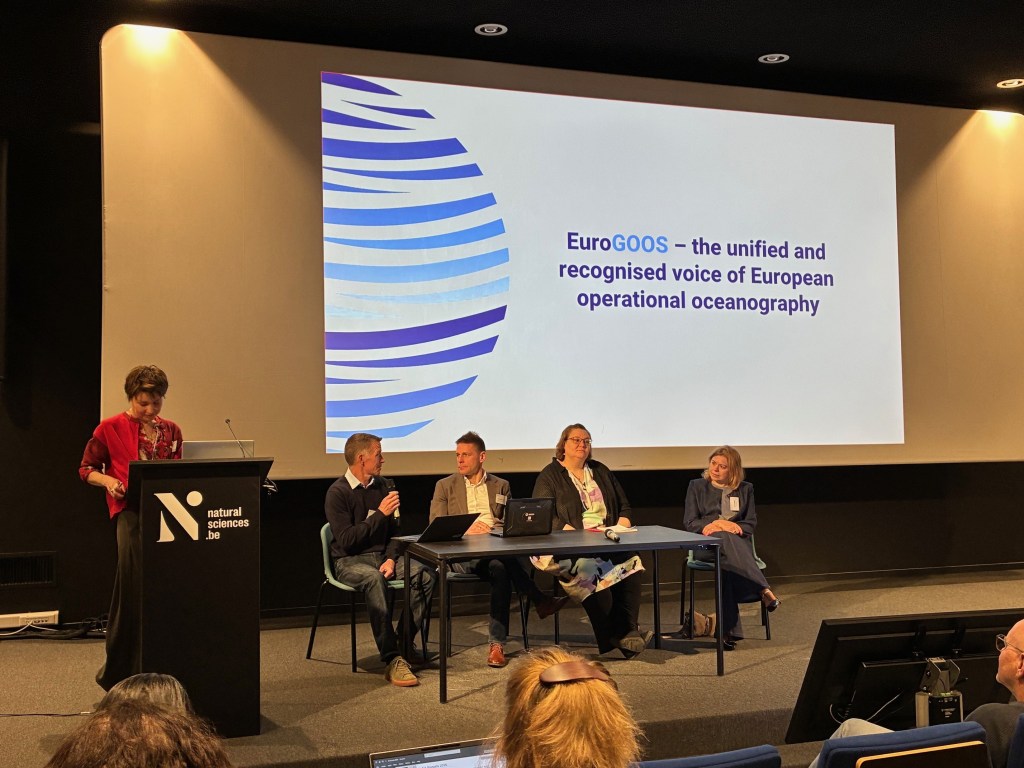
After successful internal discussions, project representatives shared their insights with a broader audience through an interactive session, structured in two panel discussions.
The first one was focused on the EOV projects’ outcomes, feedback into sustained observing systems, their joint policy messages and their legacy aspirations. The second panel discussion, “EU Policy Supporting Ocean Knowledge”, was focused on the latest and upcoming policy developments linked to the Ocean Pact and Copernicus. This panel was shared between European Commission Officers from DG MARE and DG RTD, as well as the European Environmental Agency.
The outcomes of the first two sessions were used in the third session. The third session included a broader audience, e.g., EuroGOOS Members, key players in the European ocean observation landscape, and European Commission policy officers. The recommendations developed and the areas for action identified during these sessions are instrumental in informing policymakers, enhancing sustainable ocean management, and increasing the coherence of the global ocean observation community.
More information about the content and outcomes of Clustering Event Nr 2 will be soon available via project Deliverable D6.3.
 ObsSea4Clim